

Get in Touch
Domestic vs. Export Packaging Requirements: How Stretch Film Specifications Change When Your Products Cross Borders
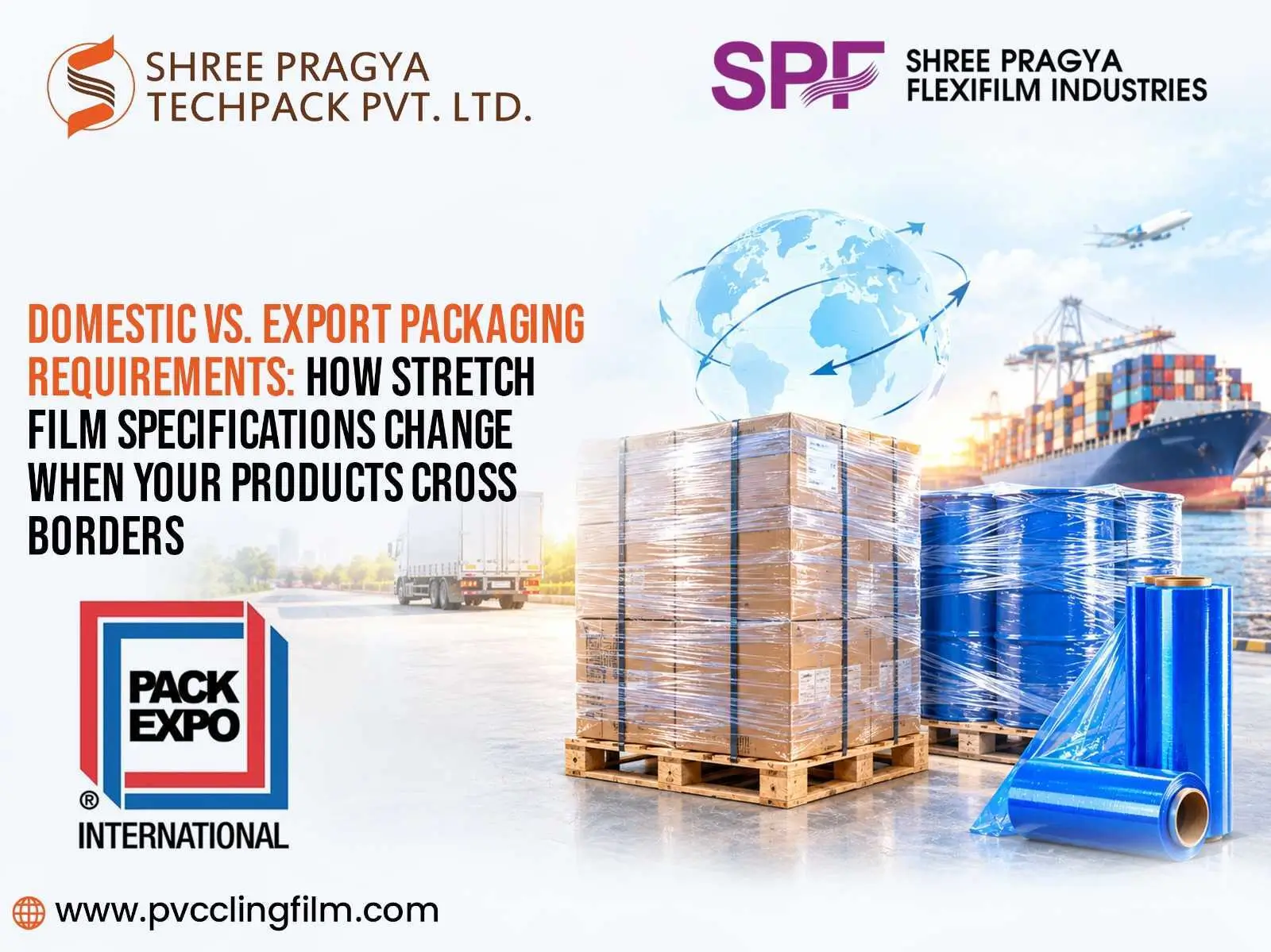
Shipping a pallet across a city is very different from sending it across the ocean. Domestic shipments reach their destination within a short time, while export loads can spend weeks in transit and pass through several stages of logistics and handling. Using the same stretch film for both situations may not always provide the protection your products need. Export shipments often face longer transit times, repeated handling, humidity, and changing temperatures, making load stability even more important. In this blog, we explain the difference between domestic and export packaging requirements and how choosing the right stretch film specifications can help keep your loads secure from dispatch to delivery.
Why Do Domestic & Export Packaging Need Different Stretch Film Specifications?
Domestic shipments often travel shorter distances and reach their destination quickly with fewer handling and storage stages. Export shipments usually face a longer and more demanding journey, especially when goods travel by sea.
Key Differences Between Domestic vs. Export Journeys
➤ Longer Transit Times: Export shipments may spend weeks in transit.
➤ More Handling: Loads can be moved through warehouses, ports, customs, and multiple transport stages.
➤ Changing Conditions: Shipping containers can experience heat, humidity, condensation, and temperature changes.
➤ Extended Storage: Goods may remain at ports or warehouses before reaching the final buyer.
➤ Higher Risk & Costs: Damage during international shipping can lead to claims, delays, replacement costs, and unhappy customers.
Because export shipments face more time, handling, and environmental exposure, stretch film suppliers in USA offer customised specifications to provide greater load stability and protection than film used for routine domestic deliveries.
Domestic Packaging Requirements
For domestic shipments, standard stretch film is often sufficient. This is because loads usually travel shorter distances, go through fewer handling points, and spend less time in transit.
For most domestic packaging applications, the main priorities are:
➤ Reliable Load Holding: Keeps pallets stable during road transport.
➤ Good Cling & Stretch: Helps create a tight, secure wrap around the load.
➤ Suitable Thickness: The film should match the weight, shape, and handling needs of the load.
➤ Consistent Quality: Reliable film performance is important for everyday packaging.
Domestic shipments require reliable stretch films that provide good load stability without unnecessary over-specification.
Export Packaging Requirements
Export shipments need stronger and more reliable packaging because goods may travel for weeks, pass through multiple handling points, and face changing environmental conditions.
For export loads, stretch film should provide:
➤ Strong Load Stability: Keeps pallets secure throughout the journey.
➤ High Puncture & Tear Resistance: Helps withstand rough handling and sharp edges.
➤ Moisture Protection: Helps reduce exposure to humidity and condensation inside containers.
➤ Long-lasting Performance: Maintains its holding strength during extended transit and storage.
Export shipments require stretch film specifications to be selected for longer transits, better handling and tougher conditions.
How Stretch Film Specifications Change for Export
When products cross borders, stretch film may need to provide higher performance and greater protection than film used for routine domestic transportation. Key specifications to consider:
➤ Higher Film Thickness (Gauge): Heavier or more demanding export loads may require thicker film for better durability and load support.
➤ Better Puncture & Tear Resistance: Stronger film helps withstand rough handling and reduces the risk of the wrap tearing during transit.
➤ Stronger Load Handling: Good stretch and cling help keep pallets tight and stable through long journeys and repeated handling.
➤ Moisture Resistance: Containers can experience humidity and condensation, so a high-quality stretch film can help provide an additional barrier around the load.
➤ UV Protection Where Required: For loads exposed to sunlight during storage or transport, UV-stabilised stretch films can help maintain film performance.
➤ Security & Concealment: Transparent or colour stretch film can help conceal products and make visible tampering easier to identify.
➤ Consistency Quality: Export shipments require reliable film performance because replacing or rewrapping a damaged load overseas can be costly and time-consuming.
Stretch films for exports should be chosen based on load weight, product type, transport conditions, transit time, and handling requirements rather than simply considering only thickness.
Choose Shree Pragya Flexifilm Industries for Domestic & Export Packaging
Shree Pragya Flexifilm Industries is a leading PE and PVC stretch film manufacturer in USA, supplying film in the right specifications for both domestic and export needs. We help businesses keep their loads secure throughout transportation and storage. From everyday local shipments to demanding export journeys, the right film specification can be selected based on the load, handling conditions, and transit requirements. Meet Shree Pragya Flexifilm Industries at PACK EXPO International 2026, October 18–21, at McCormick Place, Chicago, at Stall No.LL-10519, where we will showcase our PE and PVC stretch film along with our complete range of packaging films. For more details, call us today.