

Get in Touch
Aluminium Foil Thickness Guide: Packaging, Cooking & More
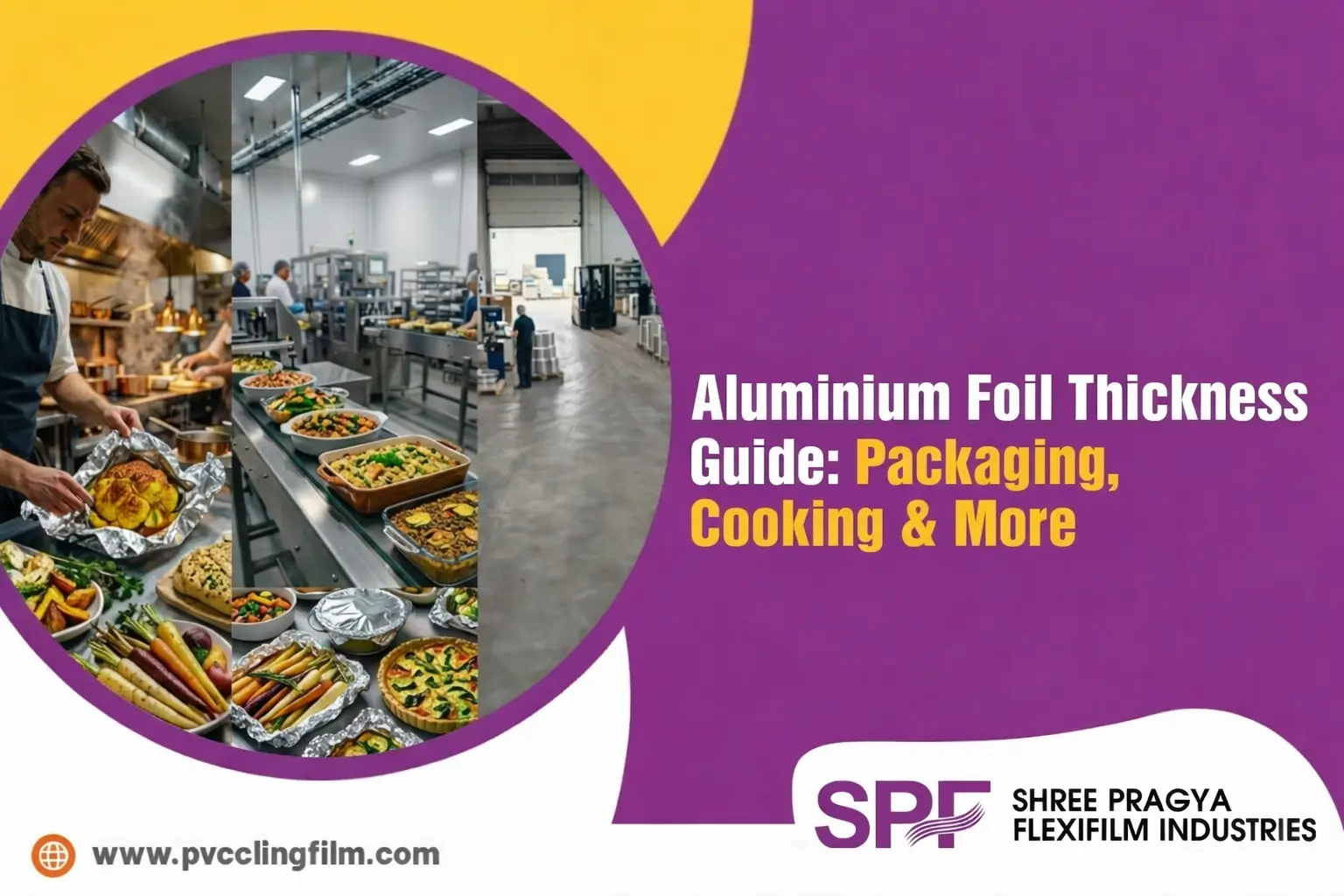
Aluminium foil is a versatile and essential tool in commercial and domestic kitchens. It is extensively used in food storage, cooking and wrapping applications. These foils come in various thicknesses and sizes to suit different applications. When it comes to aluminium foil thickness, it makes a significant difference in performance and durability. Whether it covers cooked food or lining baking trays, not all foils are the same. Understanding the different aluminium foil thicknesses, which are measured in microns or mils, can help you choose the right foil for your application. In this blog, we compare standard aluminium foil vs. heavy-duty aluminium foil vs. extra heavy-duty aluminium foil, their typical thickness range and the best use cases.
What is Aluminium Foil Thickness?
Aluminium foil thickness describes how thick a foil sheet is. This is an important performance indicator determining how the foil performs in different applications. Foils can also be measured in gauge; the thicker the gauge, the more puncture-resistant the foil is. Typical foil thickness is:
➤ Microns (µm) – 1 micron = 0.001 milllimeters
➤ Millimeters (mm)
➤ Mils- 1 mil = 0.001 inches
➤ 6 Gauge & lower = 5.0 mm – 6.5 mm
Understanding these measurement units is crucially important to choosing the right type of foil for particular wrapping applications.
Why Does Aluminium Foil Thickness Matter?
When choosing aluminium foil for commercial kitchens, the thickness is an important parameter to take into consideration. This is because the aluminium foil thickness impacts flexibility, strength, heat resistance, and performance. Thin foils are easier to wrap and lightweight, but are prone to tear and puncture. Also, these foils offer moderate protection against high heat and humidity. Thicker foils from trusted aluminium foil manufacturers in India offer excellent insulating performance, durability, and protection, making them ideal for demanding wrapping applications.
How Foil Thickness Influences Different Applications
Aluminium foil thickness plays an important role in determining how it performs across various applications. In food packaging, the thickness helps the main product’s freshness by improving shelf life and providing a protective barrier. In cooking, it affects the foil’s ability to tolerate heat and maintain its shape when exposed to high temperature or pressure. In industrial applications, thermal strength and mechanical strength are key performance considerations.
Exploring the Different Aluminium Foil Thickness
The three common types of aluminium foil, based on their thickness, are:
➤ Standard Duty Aluminium Foil
➤ Heavy-duty Aluminium Foil
➤ Extra Heavy-duty Aluminium Foil
Standard Duty Aluminium Foil
Standard foil thicknesses are typically between 0.0006 and 0.0007 inches (15 to 18 microns). These foils are economical in price and ideal for food service operations. The common uses include:
➤ Wrapping sandwiches and veggies on the grill
➤ Covering dishes for baking
➤ Shaping foil into mold for cooking & baking
Heavy-duty Aluminium Foil
Heavy-duty foil thicknesses are typically between 0.0008 and 0.0009 inches (20 to 25 microns). With a high level of puncture and tear resistance, high heat resistance and strength, these foils are the ideal choice for high-intensity cooking applications. The common uses include:
➤ Lining pans and baking trays for broiling & grilling
➤ Wrapping heavy foods and large leftovers
➤ Covering stainless steel pans for transport
➤ Wrapping greasy or juicy food items
Extra Heavy-duty Aluminium Foil
Extra heavy-duty foil thickness is typically between 0.0011 to 0.0016 inches (28 to 48 microns). These foils are ideal for high-heat cooking, freezing and long baking durations. They provide superior strength and heat retention, making extra heavy-duty foils suitable for professional kitchens. The common uses include:
➤ Catering & commercial food service usage
➤ Industrial packaging and sealing
➤ Preventing freezer burns and flavour migration
➤ High-heat cooking and long baking hours
➤ Protecting containers as a lid in transport
Factors Influencing Aluminium Foil Thickness Selection
Type of Applications
The intended aluminium foil for food wrapping or other uses plays an important role in choosing the right thickness. Different applications require varying levels of strength, flexibility and protective properties.
Cooking Applications
➤ Baking & Roasting: Thicker foils are preferred as it resists tearing when handling heavy or moisture-rich foods.
➤ Grilling: High-temperature and direct heat exposure need heavy-duty aluminium foils that maintain strength and integrity without breaking down.
➤ Freezing: A thicker foil layer helps protect food from moisture loss and freezer burn, preserving freshness for longer storage.
Packaging Applications
➤ Food Packaging: Thinner foils offer excellent flexibility and sealability as well as product performance.
➤ Light-sensitive Products: Thicker foils provide superior opacity, helping shield contents from UV rays and visible light that may affect product quality.
Conclusion
Whether it is wrapping, grilling or preserving food, understanding aluminium foil thickness plays an important role in efficiency and performance. Standard foils are suitable for everyday kitchen use, heavy-duty foils and extra heavy-duty foils are best suitable for professional commercial kitchens. Shree Pragya Flexifilm Industries is the top aluminium foil supplier in India, offering a comprehensive range of wrapping and packaging products, including aluminium foils. We provide aluminium foils in different thicknesses and widths to suit your specific applications. To discuss your requirements, call us today and also our aluminium foil products.