

Get in Touch
How Machine Stretch Film Improves Packaging Efficiency in High-Volume Warehouses
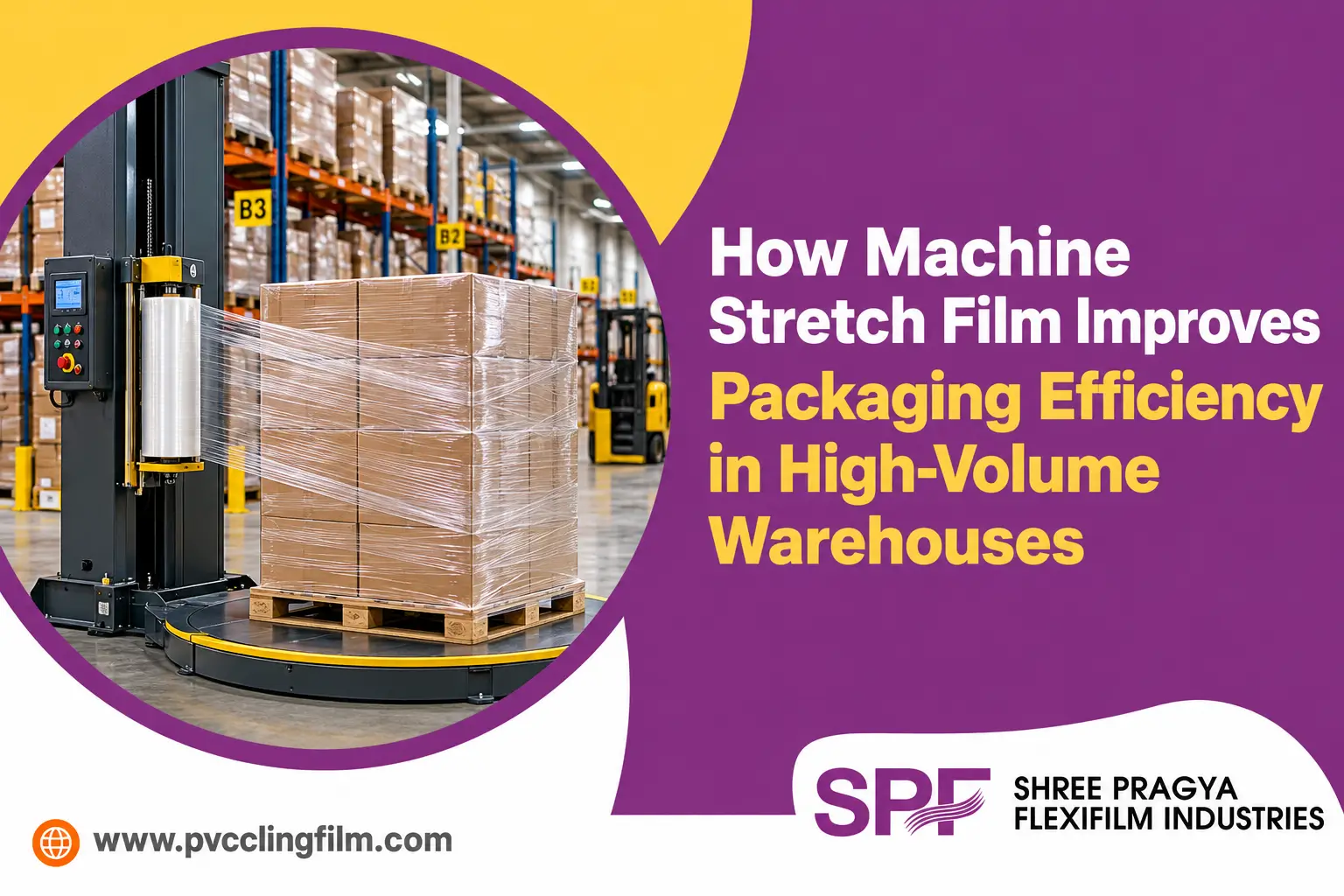
In high-volume warehouses packaging efficiency plays a role in how fast goods are ready to be sent out. When hundreds of pallets need to be wrapped each day, relying on wrapping can slow things down. It increases the need for workers. Often results in uneven packaging quality. Using machine stretch film makes pallet wrapping faster and more consistent. It also helps keep loads during transport.
For businesses that handle shipments regularly picking the right stretch film makes a big difference. It helps use materials wisely, reduces delays in packaging and keeps products safe during handling and shipping. Shree Pragya Flexifilm Industries knows how important reliable packaging materials are. They understand that good packaging supports warehouse and logistics operations.
What Is Machine Stretch Film?
Machine stretch film is a type of plastic film designed for use with automatic or semi-automatic pallet wrapping machines. It is typically made from linear low-density polyethylene (LLDPE), which provides flexibility, stretchability and resistance to tearing. These properties help the film wrap pallets securely, hold goods together and maintain load stability during handling and transportation.
During wrapping, the machine stretches the film and applies it in even layers around the pallet. The tension created during this process helps keep boxes, containers and other items securely grouped while they are stored or transported.
Unlike hand-applied film, machine-grade film is designed to work with equipment that controls wrapping speed, film stretch and tension. This allows businesses to achieve more consistent wrapping across large numbers of pallets.
For warehouses handling high shipment volumes, Shree Pragya Flexifilm Industries Flexifilm Industries recognises the importance of selecting suitable stretch film to support efficient packaging, reliable load containment and smoother dispatch operations.
How Machine Stretch Film Improves Warehouse Packaging Efficiency
1. Faster Pallet Wrapping and Higher Throughput
In busy warehouses, packaging speed plays an important role in keeping shipments on schedule. Machine stretch film allows automated wrapping systems to secure pallets quickly and consistently, making it a practical choice for high-volume operations where manual wrapping may slow down productivity.
Automated wrapping systems can work alongside conveyor belts and other packaging equipment, reducing delays between order preparation and dispatch. Using machine grade PE stretch film can support consistent wrapping and reliable load stability when the film is matched to the pallet’s weight, shape and handling requirements. Overall packaging output depends on factors such as machine capacity, pallet dimensions, load characteristics and how efficiently the equipment operates as a whole.
2. Consistent Film Application and Load Stability
Uneven wrapping can let products move when a forklift is handling them or when they are being transported. Using a machine to apply the wrapping helps make sure each load has the number of layers of film, the same wrapping pattern and the same level of tension.
When set up properly this regularity helps keep the load secure and lowers the chance that the load will move while it is being shipped. Selecting the right film depends on the weight of the pallet, the presence of sharp edges, the shape of the load and mainly how tightly the goods need to be secured during transportation.
3. Optimised Film Consumption and Lower Packaging Costs
Packaging costs go beyond the price of a film roll. How much film is used per pallet, how long wrapping takes, how often goods get damaged and how much rewrapping is needed all affect the cost.
Machine pre-stretch systems stretch the film before it’s applied. This helps warehouses keep loads secure while using material. Stretching too much can make the film weaker or reduce its performance. Watching film tension, wrapping patterns and how much film is used per pallet regularly can help find ways to improve.
4. Reduced Manual Handling and Smoother Workflow
Manual pallet wrapping requires a lot of work and can slow things down when there are more shipments. Machine wrapping helps workers avoid walking around pallets and putting film on by hand. This can let employees spend time on checking putting labels on preparing orders and other jobs in the warehouse. Good machine protection, training for workers and regular maintenance are still very important for safe and effective work.
The Role of Machine Stretch Film in Reducing Transit Damage
Pallets can face shaking, movements, pressure from being stacked and lots of handling when they are being moved around. Using stretch film helps keep products in one place making sure that individual boxes stay together and lowering the chance that the load moves around.
The film also acts as a shield, against dirt and small amounts of water. It shouldn’t be seen as completely waterproof packaging. Getting the way the pallet is built right, choosing the wrapping style and having enough force to hold everything in place are all just as important.
For warehouses that work with different kinds of products PE stretch film can be chosen based on how heavy the load is, how thick the film is, how well it can resist being torn and how it works with the wrapping machine. Testing the wrapping setup helps make sure that using less material doesn’t hurt the safety of the shipment.
How to Select the Right Machine Stretch Film for Your Warehouse
Selecting the right film starts with knowing what the warehouse needs.
Think about these things:
➤ Understanding the Load Requirements: Look at how big the pallet’s how much it weighs, what shape it is and if it has any sharp parts.
➤ Film Quality and Performance: Check how much the film can stretch, how strong it is against holes, how well it resists tearing and how tight it holds the load.
➤ Machine Compatibility: Make sure the size of the roll of the film. The core details work with the wrapping machine.
➤ Pre-stretch Settings: Change the machine settings based on what the film maker says and what is needed to keep the load safe.
➤ Operational Costs: Look at how much film’s used per pallet, how long it takes to wrap, how often the machine stops and how much damage happens. Don’t just look at the price of the roll.
Companies that are looking at packaging materials should also know what each material is used for. PVC stretch film is used for some cling-film and packaging jobs but PE-based machine stretch film is usually the better choice for regular warehouse pallet wrapping.
Shree Pragya Flexifilm Industries Flexifilm Industries is a good option when looking at packaging material needs, for warehouses and industrial uses we provide materials that fit the working conditions and helps companies get the best mix of performance, material use and cost.
Conclusion: Improving Packaging Efficiency with the Right Stretch Film
Usage of Machine stretch film is helping high-volume warehouses achieve consistent packaging, speed up pallet preparation and control material use more efficiently. The actual benefit comes when the film is chosen carefully to match the wrapping machine, the type of load being wrapped and the shipping needs.
For companies looking to make their packaging operations smoother and more cost-effective, checking how well the film quality is and calculating the price per pallet can lead to buying choices. We understand that using the packaging materials is critical to keeping warehouse operations steady and efficient. Choosing the film and setting up the wrapping process properly helps ensure consistent packaging and reliable movement of goods across the supply chain.
Shree Pragya Flexifilm Industries Flexifilm Industries offers packaging solutions to support the needs of businesses managing high-volume warehouse and logistics operations. Contact Shree Pragya Flexifilm Industries Flexifilm Industries to explore suitable stretch film options for your packaging requirements and improve efficiency across your pallet wrapping process.
Read: How to Choose the Right PVC Stretch Film for Your Packaging Needs?