

Get in Touch
Effects of Stretch Ratio on Stretch Film Strength and Performance
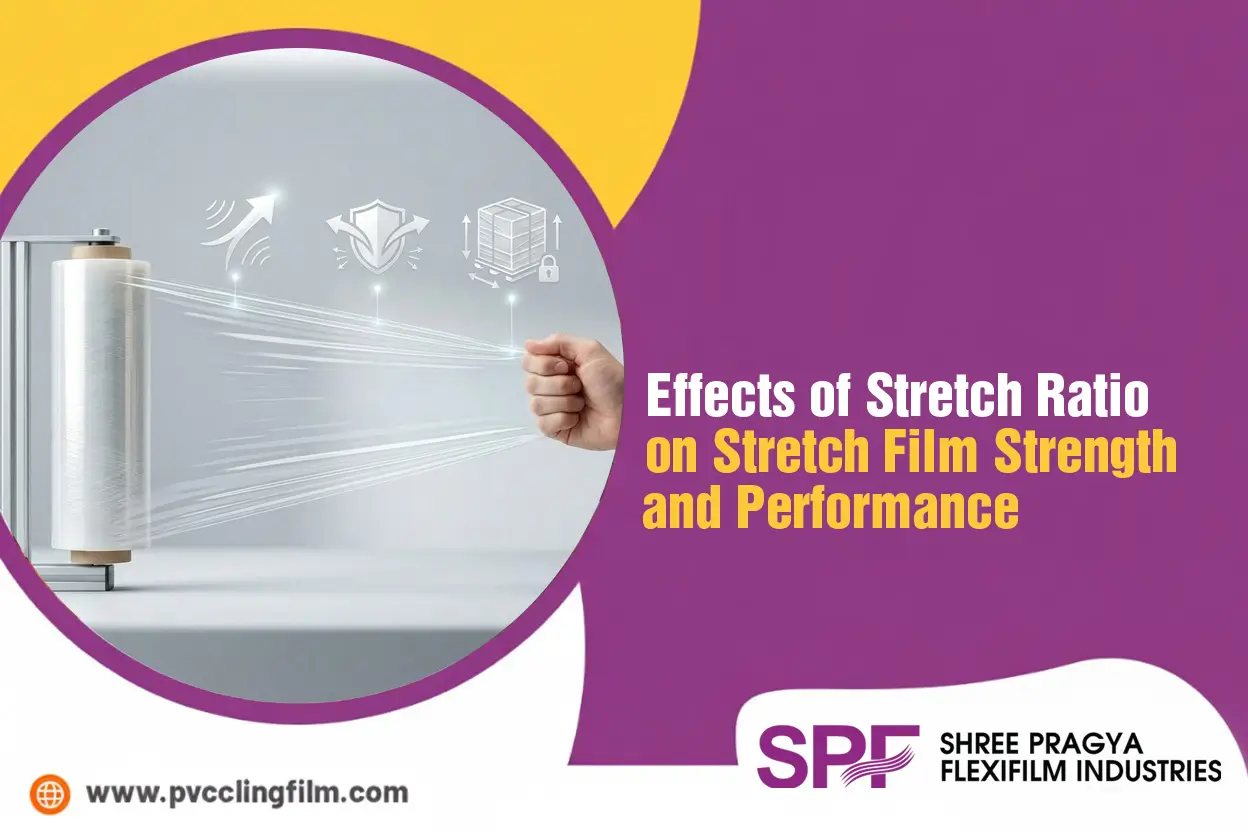
In the world of logistics and packaging, stretch film is an unsung hero. Behind every successful palletized goods and deliveries, the stretch film’s ability to keep goods together under pressure is impeccable. It is safe to say that the stretch ratio (pre-stretch percentage) has a significant effect on film strength and performance. The stretch ratio determines how much the film elongates before contacting the palletized load, impacting mechanical properties like:
➤ Tensile strength
➤ Elastic recovery
➤ Puncture resistance
➤ Containment force
➤ Film consumption efficiency
With this case, we at Shree Pragya Flexifilm Industries evaluate the effects of stretch ratio on stretch film strength and performance.
Objective of Case Study
The goal is to determine:
➤ The optimal stretch ratio for pallet wrapping on the most challenging wrapping machines.
➤ The mechanical and operational performance of stretch film
➤ The best balance between load stability & film consumption
We aim to answer the following questions:
➤ Does a higher stretch ratio always improve load containment?
➤ How does stretch ratio affect puncture resistance and tear strength?
➤ What is optimal operating stretch ratio for industrial packaging?
Understanding the Role of Stretch Films in Packaging Operations
Stretch films function as an active load-stabilizing system, not just a protective barrier. When stretched around a pallet, the film stores elastic energy, which creates a containment force that holds the load together. Stretch ratio affects three fundamental aspects:
➤ Film geometry
➤ Viscoelastic stress state
➤ Molecular orientation
These changes collectively determine the overall strength and performance of stretch film.
Stretch Ratio Typical Ranges
The stretch ratio describes how much the film is extended relative to its original length. In industrial pallet wrapping machines, the stretch ratios typically range between:
➤ 100-150% → low stretch
➤ 200-250% → Optimal operational range
➤ 300% + → High stretch
➤ 450% → Ultra high stretch
Mechanisms Affecting Stretch Film Performance
Geometric Effects
When stretch film is elongated:
➤ The film thickness decreases
➤ Cross-sectional area reduces
➤ Material becomes thinner on the load edges
This thinning increases the risk of puncture and tearing, especially around the sharp corners.
Molecular Orientation
As the film stretches, the polymer chain aligns in the direction of stretch. This alignment leads to:
➤ Higher tensile strength
➤ Increased stiffness
➤ Improved load stabilization
However, this benefit eventually reaches a limit when thinning begins to dominate the material response.
Viscoelastic Stress Behaviour
Stretch film demonstrates viscoelastic behaviour, meaning it behaves partly like an elastic material and partly like a viscous material. Immediately after wrapping:
➤ The film exerts a strong containment force
➤ Over time, stress relaxes
This phenomenon is known as stress relaxation, and it reduces containment force during transport.
Mechanical Properties Influenced by Stretch Ratio
Tensile Strength
Tensile strength increases with stretch due to molecular alignment. The typical industrial stretch film includes:
➤ Tensile Strength → 4,957 to 7,000 psi
➤ Elongation at Break → 488 to 925%
However, high pre-stretch consumes a portion of the film’s available elongation capacity, reducing its ability to absorb dynamic impacts.
Puncture Resistance
Puncture resistance depends on two compelling effects:
➤ Positive effect: Increased tensile stress capacity
➤ Negative effect: Reduced film thickness
In practice, puncture resistance tends to reach a maximum at intermediate stretch levels, after which performance declines.
Tear Resistance
Stretch ratio also affects tear resistance differently in two directions:
➤ Machine direction: Increased stiffness
➤ Transverse direction: Higher tear resistance
High stretch ratios may increase the risk of tear propagation, especially during vibration or abrasion in transportation.
Key Findings
Increasing the Stretch Ratio Does Not Always Improve Containment
There is no significant improvement in load containment beyond certain stretch levels. Higher stretch increased the initial containment force, but this advantage was reduced over time due to stress relaxation.
Wrap Pattern Matters More Than Just the Stretch Ratio Alone
Load containment depends heavily on:
➤ Number of film wraps
➤ Wrap pattern
➤ Load geometry
Stretch ratio alone cannot determine pallet stability.
Optimal Stretch Ratio for Industrial Packaging
The recommended operational stretch ratios are:
| Load Type | Recommended Stretch Ratio |
| Light loads | 230 to 300% |
| Medium loads | 200 to 250% |
| Heavy loads | 220+% |
| Irregular loads | 200+% |
For most industrial applications, a 200–250% stretch ratio provides the best balance between containment force and film durability.
We Can Conclude
Stretch ratio plays a crucial role in determining the mechanical performance and operational efficiency of stretch film. It’s safe to say:
➤ Stretch ratio directly affects film strength, thickness, and molecular orientation.
➤ Higher stretch ratios improve containment force only up to a certain point.
➤ Excessive stretch leads to thinning, neck-in, and increased damage risk.
➤ The optimal stretch range for most palletized loads is 200–250%.
Choosing the right stretch film and stretch ratio can significantly improve load containment and reduce operational costs. Shree Pragya Flexifilm Industries, as a leading stretch film supplier in India, offers a range of stretch films engineered to deliver high tensile strength, exceptional elongation and reliable load containment, helping businesses achieve better packaging performance. Explore our packaging films and request quotes.